
By-Laws
NEBRASKA MORTGAGE ASSOCIATION MISSION STATEMENT
The Mission of the Nebraska Mortgage Association is to create an environment that enhances its members’ efforts to invest in communities while achieving their business objectives. The Nebraska Mortgage Association will provide educational opportunities to its members, promote positive legislative advocacy, encourage and support member interaction, and be the voice of real estate finance.
NEBRASKA MORTGAGE ASSOCIATION AMENDED & RESTATED BYLAWS
ARTICLE I - Name
The general nature of business to be transacted by the Association is to provide educational advancement of persons engaged in the real estate mortgage business in the State of Nebraska.
ARTICLE III - Membership
3.1 Membership. The membership of the Association shall consist of two (2) classes: Regular Members and Affiliate Members.
Regular Members. Regular Members shall be:
(a) Mortgage Bankers/Mortgage Brokers (individuals and organizations whose principal business is the originating, financing, closing, selling and servicing of mortgage loans on real estate);
(b) Life Insurance Companies and Pension Funds;
(c) Savings & Loan Associations, State or Federally chartered;
(d) Savings Banks;
(e) Banks (State or National), Trust Companies and Industrial Banks; and
(f) Credit Unions.
Affiliate Members. Affiliate Members shall be individuals and organizations that support and promote the objectives of the Association, and who have applied for and been accepted as an Affiliate Member of the Association.
Application for membership in the Association shall be in writing with such information as may assist in passing on the qualifications of the candidate. The Board of Directors shall review the applicant’s qualifications. Admission to membership in the Association shall be submitted to a vote of the Board of Directors at a regular meeting.
3.2 Transfer of Membership. Membership in the Association is not transferable or assignable. Any sale, transfer, merger, reorganization, or other disposition resulting in a change in the ownership of the Member shall be deemed a transfer or assignment. In such event the surviving organization shall re-apply for membership. If the application is approved, current dues paid will be applied to the new membership. If the application is rejected, the original membership shall be immediately cancelled, and dues paid under the original membership shall be forfeited.
3.3 Voting. Each Regular Member and Affiliate Member shall be entitled to one vote at all meetings of the Association. The individual with authority to cast the vote on behalf of the
ARTICLE IV – DUES
The annual dues of each Regular Member and Affiliate Member of the Association shall be in such amount as are established annually by the Board of Directors. The membership of any member failing to pay membership dues within ninety (90) days from the date due shall be terminated.
ARTICLE V - Officers
The Officers of the Association shall be a President, Vice President/President-elect, Secretary and Treasurer, which officers shall perform the duties ordinarily required of such offices. The offices of Secretary and Treasurer shall be separate offices. Officers shall be elected at the annual meeting of the members of the Association, and all shall serve for a period of one year or until their successors are elected. The officers shall be members of the Board of Directors. Officers may serve successive terms. The officers of the Association shall serve without compensation, except that the officers may be reimbursed for reasonable expenses in the performance of their duties.
ARTICLE VI - Powers and Duties of Officers
6.1 President. The President shall preside at all meetings of the Association, Board of Directors, and the Executive Committee. The President shall have general charge of the affairs and business of the Association, subject to the supervision and control of the Board of Directors. The President shall be an ex-officio member of all committees. The President shall sign, or delegate to the Executive Director authority to sign, all written contracts and written obligations of the Association which may be approved by the Board of Directors.
6.2 Vice-President. In case of the death or absence of the President, or of the President’s inability in any cause to act, the Vice-President shall perform the duties of the office until such time as the vacancy shall have been filled in accordance with the Bylaws. The Vice-President shall succeed the President.
6.3 Secretary. The Secretary shall keep a record of the proceedings of all meetings of the Association, the Board of Directors, and the Executive Committee and of all other matters of which a record shall be deemed advisable by the Association. The Secretary shall conduct the correspondence of the Association with the concurrence of the President. The Secretary shall issue notices of all meetings and in general perform such other duties as are usually required by such office.
6.4 Treasurer. The Treasurer shall collect and disburse all of the funds of the Association under the direction of the Board of Directors. The Treasurer shall keep regular accounts and shall report at each regular meeting of the Board and at such other times as the Board may require. Authorized signatures on depositories for the Association shall be the Treasurer, President, Vice President, and Secretary.
6.5 Removal of Officers. Any officer elected or appointed may be removed by the Board of
6.6 Executive Director. The Board of Directors may hire or retain the services of an Executive Director as an employee of the Association or as an independent contractor. The Executive Director shall manage the day-to-day operations of the Association under the supervision and direction of the Executive Committee and the Board of Directors, performing such duties as are specified or implied in these bylaws or as may be assigned by the Executive Committee and/or the Board of Directors.
ARTICLE VII - Board of Directors
7.1 General Powers. The business and affairs of the Association shall be managed under the direction of its Board of Directors.
7.2 Number, Election, Tenure, and Qualifications. The Board of Directors shall consist of not less than 11 nor more than 14 Directors and shall include:
(a) The President, Vice President, Secretary and Treasurer;
(b) The immediate past President of the Association; and
(c) A minimum of 6 and a maximum of 9 other members of the Association.
Regular Members and Affiliate Members may serve on the Board of Directors and be elected as an officer of the Association. No more than two officers or Board members from one organization shall hold office in the same term. A majority of the Board members shall be Regular Members. A Board member shall serve a term of three (3) years and may serve no more than two (2) consecutive terms. A Board member’s term shall be extended beyond 6 years while serving in the roles of Vice President, President and Past- President.
7.3 Attendance and Resignation. Absence from two consecutive meetings of the Board of Directors without notice may be construed as resignation from the Board of Directors and the seat may be declared vacant by the Board of Directors.
7.4 Committees. The Board of Directors shall appoint all committees, except the Executive Committee and the Nominating Committee, and shall have the power to appoint replacement committee members.
7.5 Voting. A majority of the members of the Board of Directors shall constitute a quorum. If a quorum is present when a vote is taken, the affirmative vote of a majority of the Directors present at a meeting of the Board of Directors shall be the act of the Board of Directors.
7.6 Meetings. The Board of Directors shall meet no less than six times each year, the places and dates to be determined by the President. Special meetings of the Board of Directors may be called at any time upon three days written notice by the President or by three Directors.
7.7 Attendance by Means of Communication. The Board of Directors may permit any or all Directors to participate in a regular or special meeting of the Board of Directors by, or conduct the meeting through the use of, any means of communication by which all Directors participating in the meeting may simultaneously hear each other during the meeting. A Director
ARTICLE VIII - Election of Officers/Directors
The members shall elect a President, Vice President, Secretary and Treasurer, and those number of directors as determined by the Board of Directors. The election of officers and directors shall be by paper or electronic ballot distributed to the members not less than thirty
(30) days prior to the annual meeting. Officers and directors elected by the members shall be sworn in and take office at the annual meeting of the Association. Vacancies among the officers or directors of the Association may be filled by the Board of Directors. The term of an officer or director elected to fill a vacancy shall expire at the next annual meeting of members at which officers and directors are elected.
ARTICLE IX - Nominating Committee
The Nominating Committee shall be made up of the immediate past President and such additional members of the Board appointed by the President. The Nominating Committee shall submit nominees to the Board of Directors for approval for the positions of: President, Vice-President, Treasurer, Secretary, and those number of directors as determined by the Board of Directors. The Nominating Committee shall, insofar as possible, recognize the succession of the Vice President to the office of President. The membership of the Association shall be given written notice of the nominees at least thirty (30) days prior to the annual meeting.
ARTICLE X - Executive Committee
The members of the Executive Committee shall be the President, Vice President/, Secretary and Treasurer. The Executive Committee shall make recommendations to the Board of Directors and shall transact business of an emergency nature between meetings of the Board of Directors.
ARTICLE XI – Meetings
The Association shall hold an annual business meeting at the time of its annual convention, which shall be open to all members upon payment of a registration fee to be determined by the Board of Directors. Written or printed notice stating the place, day and hour of any corporate business meeting shall be delivered, either personally, by mail or by electronic mail to each member in good standing with the Association, at least ten (10) days prior to any such meeting. If notice is mailed, the notice of a meeting shall be deemed to be delivered when deposited in the United States mail addressed to the member at his/her address as it appears on the records of the Association, with postage prepaid. At any regular or special meeting of the Association, fifteen (15) members present shall constitute a quorum for the transaction of business. Meetings may be held virtually as determined by the Executive Committee.
ARTICLE XII – Amendment
Amendments to these Bylaws may be made by the affirmative vote of a majority of the members of the Board of Directors at any meeting; provided, however, that the Board of Directors may not adopt any changes to the Bylaws that would limit the powers of members of the Association. Any amendment to these Bylaws approved by the Board of Directors shall be sent by the
Secretary or Executive Director to each member within fourteen (14) days of the date of adoption of such amendment. Any proposed amendments to the Bylaws of the Association which would limit the powers of the members of the Association may be approved at any meeting of the members of the Association by the affirmative vote of two-thirds of the members present and voting, provided a quorum is present, and provided further that written notice of the substance of any proposed amendment first shall have been sent to the members thirty (30) days in advance of the meeting.
ARTICLE XIII – Indemnification
13.1 General Rule. Subject to the provisions of Section 13.2, below, the Association shall, to the fullest extent permissible under the laws of the State of Nebraska, as now or hereafter in effect, indemnify any person (and his or her heirs or personal representatives) who was or is a party, witness or other participant to any threatened, pending or completed action, suit or proceeding, whether civil, criminal, administrative or investigative, (including without limitation, actions by or in the right of the Association,) by reason of the fact that he or she is or was a director or officer of the Association or is or was, at the request of the Association, serving as a director or officer of another corporation, partnership, joint venture, trust or other enterprise, and may, to the fullest extent permitted under the laws of the State of Nebraska, as now or hereafter in effect, indemnify any person (and his or her heirs or personal representatives) who was or is a party, witness or other participant to any threatened, pending or completed action, suit or proceeding, whether civil, criminal, administrative or investigative (including, without limitation, actions by or in the name of the Association) by reason of the fact that he or she is or was an employee of the Association, or is or was serving at the request of the Association, as an employee or agent of another corporation, partnership, joint venture, trust or other enterprise, against all expenses (including attorney's fees, court costs, transcript costs, fees of experts and witnesses, travel expenses and all other similar expenses), judgments, fines, penalties and amounts paid in settlement, actually and reasonably incurred by him or her in connection with such action, suit or proceeding. The foregoing right of indemnification shall be in addition to and not exclusive of all other rights to which such director, officer, or employee may be entitled.
13.2 Standard of Conduct. Indemnification shall be provided under Section 13.1 of this Article if, and only if, it is determined that: (a) the person seeking indemnification acted in good faith in a manner he or she reasonably believed to be in and not opposed to the best interest of the Association; and (b) the person seeking indemnification was acting within the scope of his or her official functions and duties as a director, officer, or employee of the Association and (c) the act or failure to act giving rise to the claim for indemnification does not constitute a willful or wanton act or omission of such director, officer or employee. Notwithstanding the foregoing, no person shall be indemnified in any case where the act or failure to act giving rise to the claim for indemnification is determined by a court of competent jurisdiction to be caused by the willful or wanton act or omission of such director, officer or employee of the Association. The termination of any action, suit or proceeding by judgment, order settlement, conviction or upon a plea of nolo contendere, or its equivalent, shall not, of itself, create a presumption that the person acted unlawfully or did not act in good faith or in a manner which he or she reasonably believed to be in the best interest of the Association.
13.3 Procedure. Indemnification under Section 13.1 of this Article (unless ordered by a court,) shall be made by the Association only as authorized in the specific case upon a determination that indemnification is proper in the circumstances because the person seeking indemnification has met the applicable standard of conduct set forth in Section 13.2 of this Article. All such determinations shall be made by the Board of Directors.
Article XIV – Rules of Order
The parliamentary rules and orders contained in Robert’s Rules of Order, latest edition, shall be recognized as the authority governing all meetings and conferences when not in conflict with the Bylaws of the Association.
Article XV – Dissolution
Upon the dissolution or winding up of the affairs of the Association, the Board of Directors, after providing for the payment of all obligations, shall distribute any remaining assets, within its discretion, to any other nonprofit, tax exempt organization.
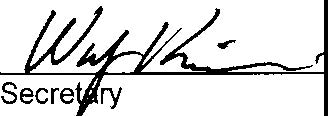
The foregoing Amended and Restated Bylaws were adopted by the affirmative vote of two- thirds of the voting members of the Association at a Special Meeting of the members of the Association on June 26, 2024 and shall supersede and replace the Bylaws of the Association.
Article XIV - Rules of Order
The parliamentary rules and orders contained in Robert's Rules of Order, latest edition, shall be recognized as the authority governing all meetings and conferences when not in conflict with the Bylaws of the Association.
Article XV - Dissolution
Upon the dissolution or winding up of the affairs of the Association, the Board of Directors, after providing for the payment of all obligations, shall distribute any remaining assets, within its discretion, to any other nonprofit, tax exempt organization.
The foregoing Amended and Restated Bylaws were adopted by the affirmative vote of two thirds of the voting members of the Association at a Special Meeting of the members of the Association on June 26, 2024 and shall supersede and replace the Bylaws of the Association.
